My child is ignoring the au pair: how does a relationship grow?
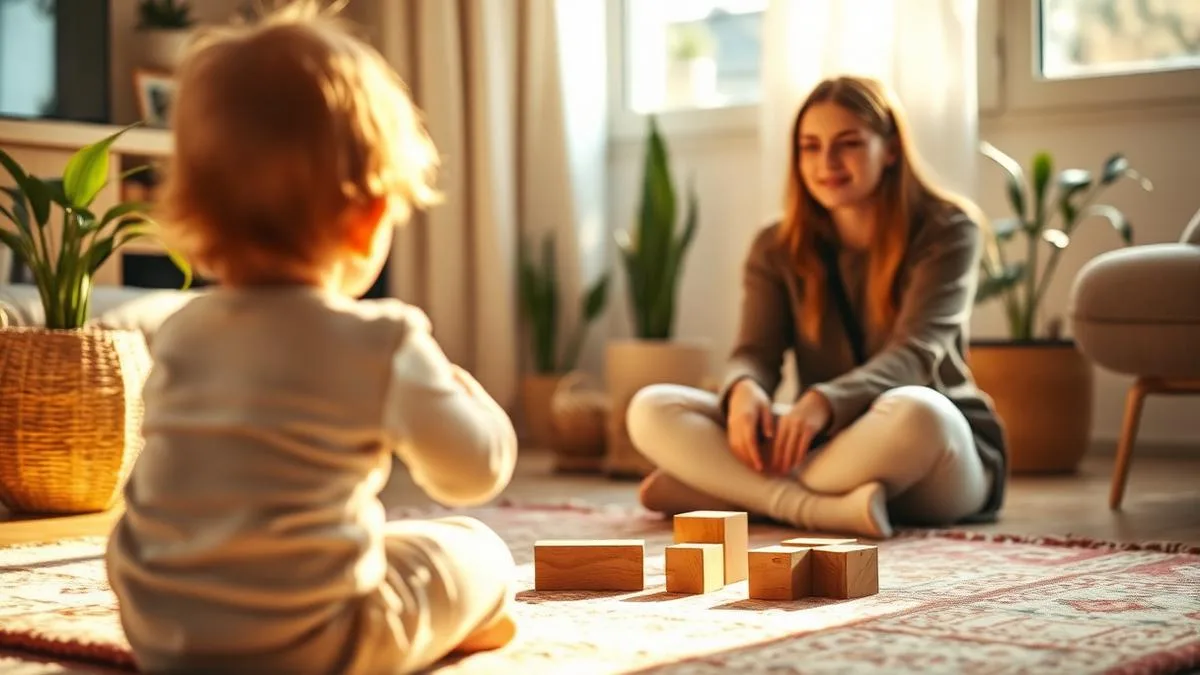
The au pair has finally arrived. The host family has spent weeks preparing and imagining how wonderful the shared year could be.
And then?
The child ignores the au pair.
The child does not answer when the au pair asks something. The child does not want to play with them. When getting dressed, it is “No, Mummy!” At bedtime, only Dad is allowed into the room. The child may even leave the room as soon as the au pair tries to make contact.
Parents quickly become worried:
My child does not accept the au pair. What should we do?
First of all: give your child time.
A relationship between child and au pair does not appear automatically the moment the au pair arrives. Trust has to grow — and for some children this takes longer than for others.
For your child, a stranger has suddenly moved in
Try, for a moment, to see the situation from your child's point of view.
A person your child barely knows has suddenly moved into their own home. This person may speak differently, look different, smell different, does not yet know the family's rules, and is now trying to make contact.
And suddenly this person is supposed to help with playing, get the child dressed, collect them from nursery, or take over things that Mum or Dad used to do.
That is an enormous change.
When settling into nursery or kindergarten, nobody would expect a child to say after a few minutes, “Great, Mum can go now.”
There, a settling-in period is deliberately built in, during which children are allowed to get to know new carers and slowly build trust.
Why should it be any different at home?
Rejection does not mean the matching has failed
“My child doesn't like our au pair.”
Parents should be cautious about drawing this conclusion, especially in the first days and weeks.
A child who asks only for Mum is not necessarily rejecting the au pair as a person.
At first, the child simply holds on to whatever gives them security.
Especially with younger children, or children with a disability, it can take longer for a new person to be accepted as a trusted carer.
This is not a competition between parents and au pair.
And it is not a sign that the au pair is unsuitable, either.
A relationship cannot be forced
Pressure is often unhelpful.
“Go on, go and play with your au pair now.”
“She's here especially for you.”
“Mummy doesn't have time right now. Go to her.”
The more strongly a child feels that they must form a relationship, the stronger their resistance can become.
Instead, let closeness develop on its own.
At first, the au pair can simply be present.
Mum sits on the floor with the child building with Lego — the au pair joins in.
Dad reads a book aloud — the au pair looks on too.
A cake is baked together — the au pair helps.
Nobody needs to replace Mum or Dad yet.
At first, the au pair simply becomes a natural part of lovely everyday moments.
Together first — then gradually step back
Especially at the start, parents can build a bridge between child and au pair.
Begin by playing all three together.
After a few days, you might get up now and then and fetch something from the kitchen.
Next time, stay away a little longer.
At some point, the child may not even notice that Mum has not been in the room for ten minutes.
Other routines can be handed over step by step in a similar way.
Perhaps Mum dresses the child at first while the au pair passes the clothes. A few days later, the au pair takes over part of it. Eventually, the whole situation works quite naturally without Mum.
Not from nought to a hundred — but step by step.
Shared, happy experiences create connection
Trust grows especially well through positive shared experiences.
What does your child love?
Going to the playground? Playing football? Drawing? Music? Animals? Baking? Looking at books? Riding a bike?
Make use of exactly these interests.
At the start, the au pair does not need to prove that they can manage every everyday situation alone. What matters far more, to begin with, is that child and au pair get the chance to get to know one another at all.
From a shared favourite game, little rituals of their own can eventually develop.
And it is exactly these small shared experiences that build a relationship.
Encourage your au pair to keep at it
The situation is not only difficult for the child.
Imagine travelling thousands of kilometres to a foreign country, moving in with a family — and the child you are meant to look after wants nothing to do with you.
That can be incredibly unsettling.
So talk to your au pair as well.
Explain that the child's reaction is not meant personally. Encourage the au pair to offer contact in a friendly, patient way, without pressing the child.
An au pair should not think, after three unsuccessful attempts at play:
“The child doesn't like me.”
Some relationships simply need longer.
Tasks may be shared out differently for a while
If, in the first few weeks, a child does not yet accept certain care situations with the au pair at all, this does not have to become a daily battle.
In that case, it can make sense to share out tasks differently for a while.
Perhaps, at first, the au pair takes on more of the lighter tasks around the children and everyday family life, helps with preparations in the kitchen, or spends more time with brothers and sisters.
Meanwhile, the au pair can continue to be present with the more reserved child and slowly build trust.
As the relationship grows, further tasks can then be taken on step by step.
The goal remains looking after the children — the path there is allowed to be flexible during the settling-in period.
Parents need to back the au pair up
Giving time, however, does not mean that children may treat the au pair disrespectfully.
A child is allowed to say:
“I don't want to play with you right now.”
The child is allowed to need time and to continue preferring Mum.
But name-calling, deliberately ignoring necessary instructions, or disrespectful behaviour should not simply be allowed to continue by parents.
This is where Mum and Dad are called upon.
The basic rules of how people treat one another are set by the parents. The au pair should not have to fight for their place in the family against the children.
And at some point, it simply happens
Perhaps, at first, it is just five minutes together.
Then ten.
At some point, the child goes to the playground alone with the au pair. The child shows them their favourite toy. The child waits for the au pair after school, or develops an in-joke with them that Mum simply doesn't understand.
And suddenly this person, who a few weeks ago was still a complete stranger, has become an important part of everyday life.
This is exactly why the question in the first few days should not be:
“Why doesn't my child accept our au pair?”
But rather:
“What does my child need in order to be able to trust this new person?”
Because a good relationship between child and au pair cannot be forced.
But it can be given time, security, and many small opportunities to grow.