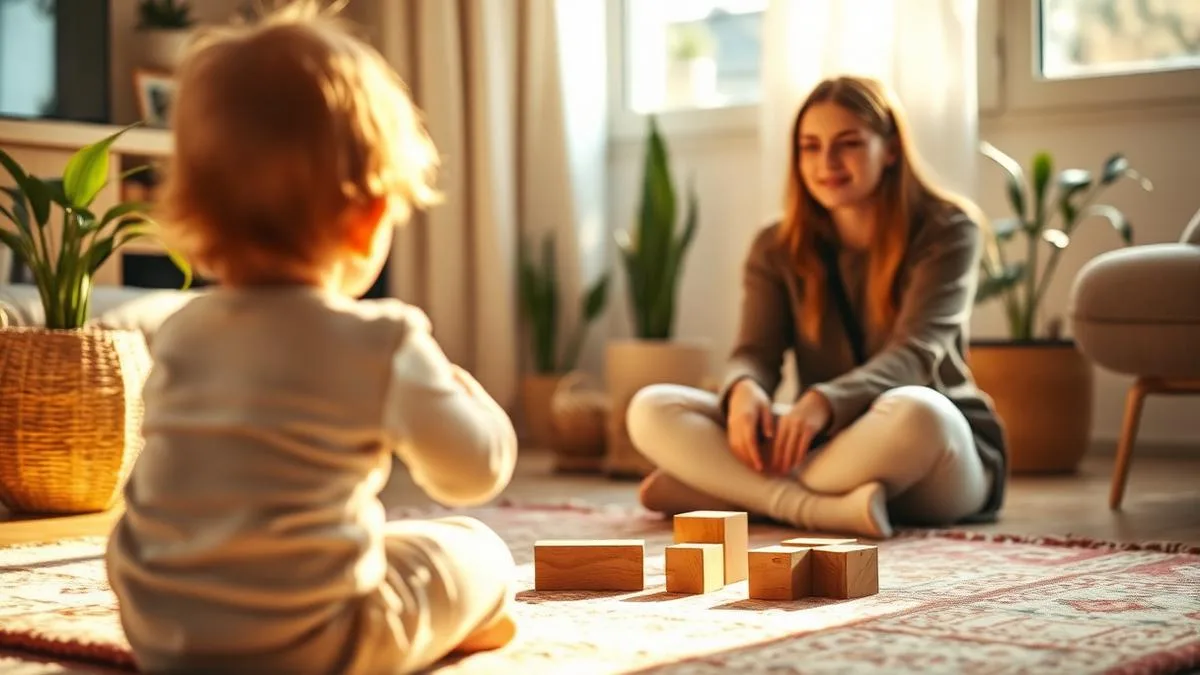
An au pair is moving in: how do I prepare my child?
Soon a new person will be moving in with you. A young person from another country, with a different culture, perhaps a different skin colour, different food, and a language that isn't perfect yet.
For adults, it becomes clear relatively quickly what that means: the au pair will become part of everyday family life and will help with looking after the children.
For children, the idea is often far more abstract.
Someone I don't even know yet is coming – and they'll suddenly be living with us?
That's why it's worth not only preparing the au pair for the family, but also preparing the children for their new au pair.
Tell your children early on who will soon be joining your family
Involve your children before the au pair even arrives. Show them photos of the au pair, tell them which country they come from, and perhaps look together on a map to see where that country actually is.
What does it look like there? What language is spoken? What do people eat there? How long does the journey to Germany take?
This way, “the new au pair” slowly becomes a real person.
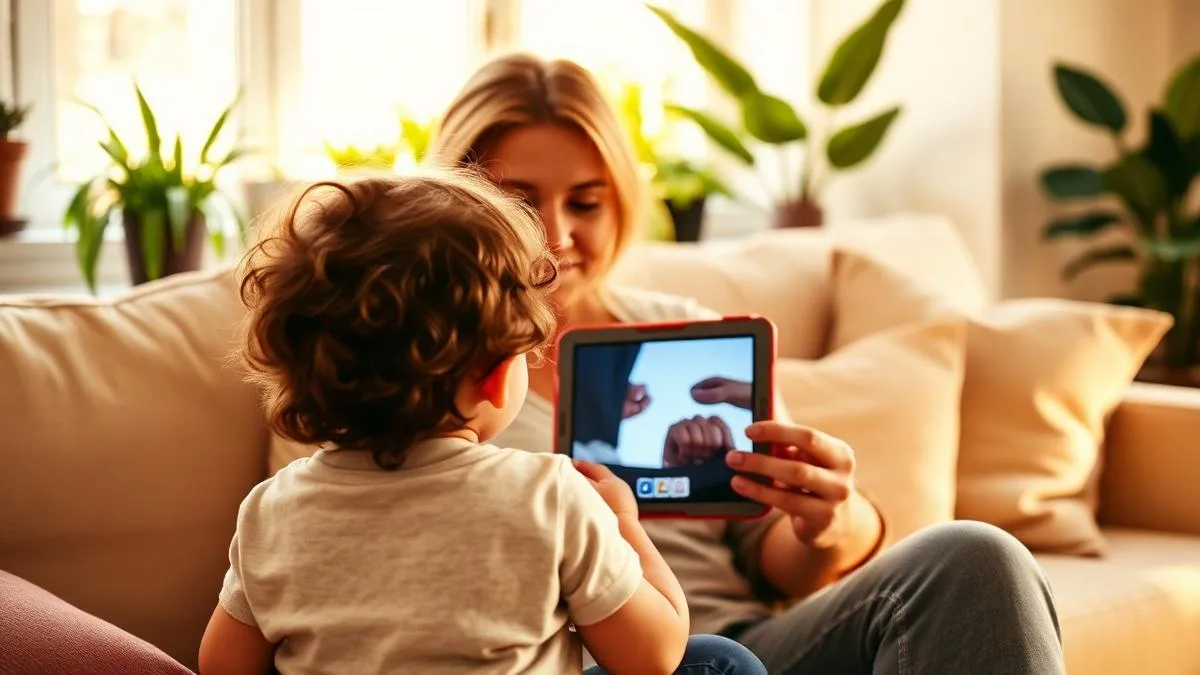
Perhaps the children can say a quick hello during a video call, show their room, or talk about what they especially like to play.
It doesn't have to turn into a long conversation yet. A few small encounters before arrival can already ensure that on arrival day, it's no longer a completely unfamiliar person standing at the door.
Explain why the au pair is coming to you
Depending on their age, children can quite understand what an au pair is.
Explain to them that a young person is coming to your family for a certain period from another country, that they want to get to know Germany and learn German, and that they will become part of your everyday family life in the process.
The au pair will play with them, accompany them, laugh together, and experience many small and big moments together.
Perhaps a very special relationship will develop from this over time – with the child with a disability just as much as with their siblings.
But this relationship must be allowed to grow.
At first, the au pair will probably feel unsure themselves
Children can understand this too.
The new au pair doesn't know anyone yet. They are suddenly sleeping in an unfamiliar house, hearing a different language all day, and don't yet know many foods, habits and rules.
Perhaps they are quiet or shy in the first few days. Perhaps they don't understand a sentence. Perhaps they don't know your child's favourite game, or don't know where the cereal bowls are kept.
Explain to your children that this is entirely normal.
No one can know on the very first day how a new family works.
“Can you help our au pair a little?”
Especially when it comes to arriving, children can take on a wonderful role.
“Someone unfamiliar is coming” suddenly turns into: “I can show them something.”
Where are the toys kept? What's the favourite book? What's the neighbours' dog called? Which way is it to the playground?
And, of course: what are all these things called in German?
Encourage your children to talk to the au pair and teach them new German words. It's fine to laugh when a word is pronounced in a funny way – as long as you're laughing with each other, not at each other.
And the tables can be wonderfully turned: perhaps the au pair will teach the children English words, or terms from their own language, in return.
Suddenly, both sides are learning from one another.
A different culture is allowed to be different
An au pair year also means cultural exchange – and it begins right at the kitchen table.
Perhaps the au pair doesn't know a particular German dish. Perhaps they don't eat certain foods for cultural or religious reasons. Perhaps at some point they'll cook something from their home country that your children have never seen before.
Appearance, clothing, hair or skin colour may also be different from what your children have known so far in their immediate environment.
Children are allowed to be curious and to ask questions.
Use these moments. Talk about the fact that people look different, speak different languages, eat differently and grow up with different traditions – and that this can be genuinely fascinating.
The au pair doesn't have to be the best friend straight away
Of course, we hope that a close relationship will develop between the children and the au pair.
But this can't be decreed on the day of arrival.
Perhaps your child will initially still only want to be put to bed by Mum. Perhaps a sibling is reserved. A child with a disability may need even more time to build trust in a new person.
This is not a sign that the au pair doesn't fit the family.
Give both sides time.
A cautious game together can eventually turn into an inside joke. A first walk can become a favourite daily routine. And an unfamiliar young person may indeed become someone the children are already waiting for in the mornings.
An au pair year can give children an incredible amount
An au pair supports a family in everyday life. But for children, this year can mean far more still.
They experience directly that a person doesn't have to speak the same language, look the same, or come from the same culture in order to be close to them.
They learn to be considerate, to cope with misunderstandings, to ask questions out of curiosity, and not to automatically perceive differences as something foreign or negative.
And perhaps, quite incidentally, they learn their first English words, try a dish from another country, or find out how children grow up thousands of kilometres away.
Above all, though, they can learn something that reaches far beyond the au pair year itself:
To approach people who at first seem quite different from themselves with an open mind.