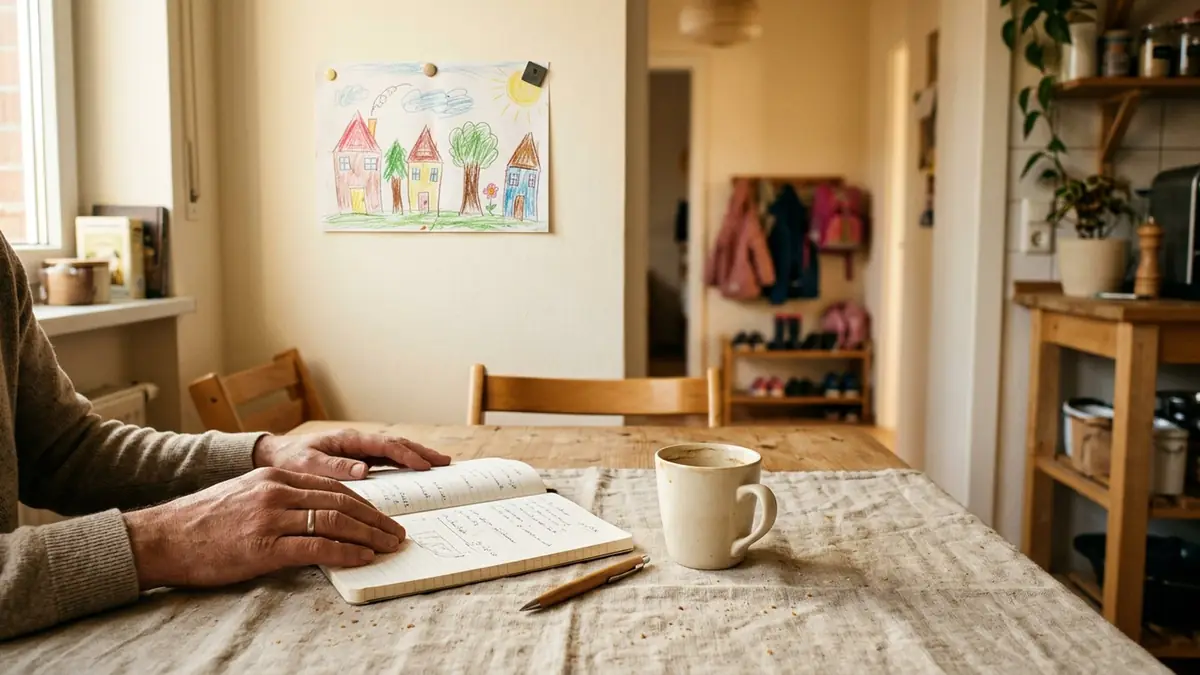
Looking for an au pair – where do I even begin?
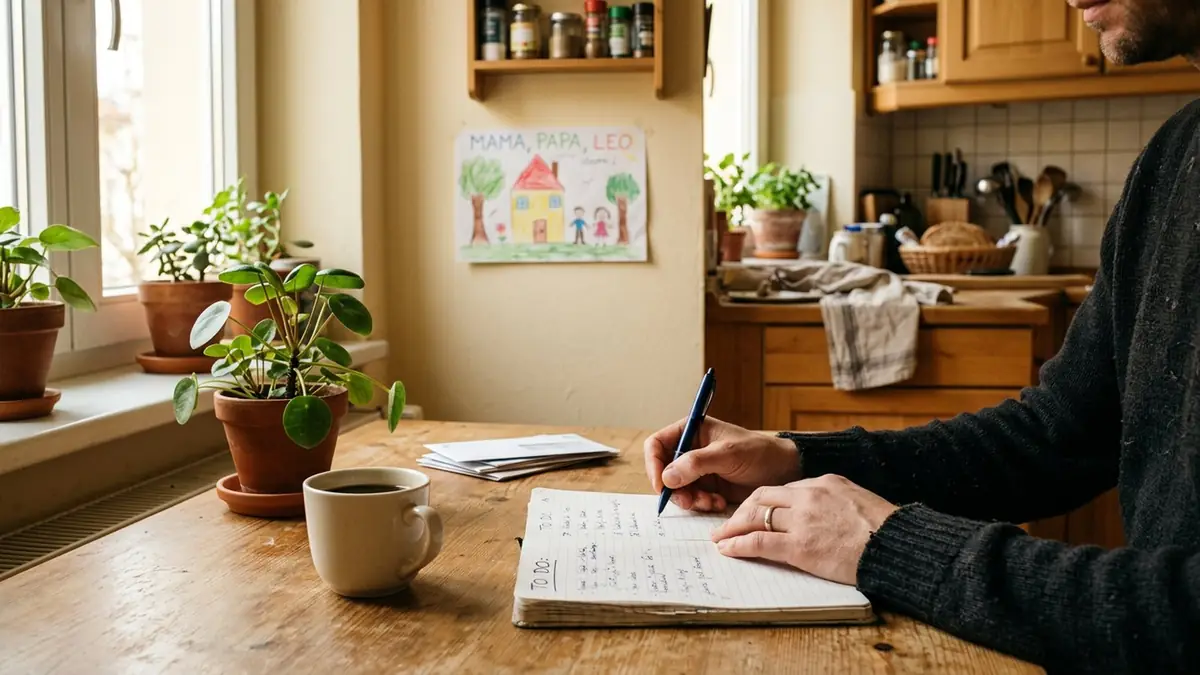
“We’d like to find an au pair – but how do we actually get started?”
Many families ask themselves this question right at the very beginning.
Perhaps you have already heard from other families how much an au pair can ease everyday life. Perhaps your childcare situation is currently difficult. Or you have noticed for some time now:
We simply need two more hands in everyday life.
Then the search often begins.
You look at the first au pair profiles, read about countries of origin, language skills and experience – and fairly quickly notice:
What exactly are we looking for?
Especially when a child with a disability lives in your family, the au pair search should therefore not begin with a profile.
It should begin with your family.
Before you look for an au pair: look at your everyday life
The most important question at the start is not:
“Which au pair do we like?”
But rather:
“Where do we actually need support?”
Think for a moment about a perfectly normal week.
When does it get difficult for you?
Is it the morning, when several children have to get ready at the same time?
The afternoon after school and kindergarten?
Is it therapy and travel appointments?
The school holidays?
Do the siblings need more individual attention?
Or would you simply like another familiar person who regularly pitches in?
The more precisely you know what an au pair should change in your family’s everyday life, the more specifically you can later search for a suitable person.
What role should the au pair have in your family?
An au pair can have different focus areas in family life.
In one family, the focus is more strongly on a child with a disability.
In another, the au pair mainly supports the siblings, so that mum or dad have more time for the child with a higher level of support needs.
And this often changes.
On Mondays, one child needs more support.
On Tuesdays, it’s the other one.
At the weekend, perhaps a sibling would finally like to go on a special outing.
Within their area of responsibility, an au pair can be flexibly involved in family life.
That’s why, before searching, you should ask yourself not only:
“Who should look after our child?”
But rather:
“How could we, as a family, sensibly share things out with an additional person?”
What does your child really need?
With a child with a disability, their individual support needs naturally also play a role.
A diagnosis alone doesn’t tell anywhere near the whole story.
Two children with the same diagnosis can have completely different needs.
Perhaps your child communicates non-verbally.
Perhaps they need very clear structures.
Perhaps they use a wheelchair.
Perhaps they need a lot of support with everyday routines.
Or their disability plays only a small role in normal childcare.
That is exactly why, in the au pair search, it is important not just to know a name for the disability, but to understand the child behind it.
Does the au pair already need to know exactly this disability?
We hear this question very often at Besondere Sterne.
And the answer is:
Not necessarily.
Of course, experience with children with disabilities can be a great advantage.
But an au pair doesn’t already have to have looked after a child with exactly the same diagnosis to be a good fit for your family.
Sometimes other qualities are at least as important.
Patience.
A sense of responsibility.
Openness.
A natural way with children.
A willingness to learn.
And a personality your children feel comfortable with.
Experience can be built up. A suitable personality cannot be trained into someone.
Do you need someone with a driving licence?
Families should also think about this as early as possible.
Do you live in a rural area?
Do children need to be driven to school, kindergarten or leisure activities?
Are there therapy appointments?
Or does your family’s everyday life work fine with public transport?
If driving is going to be an important part of everyday life later on, this wish should already be taken into account during the au pair search.
The same applies to other things that are genuinely decisive for your family.
What matters to you as a family?
An au pair lives in your home for many months.
That’s why the search is about considerably more than childcare.
How do you live?
Is there always something going on at your place, or do you need a lot of quiet?
Are you a very active family?
How important are shared meals to you?
What rules do you have?
What matters especially to you in how people interact with your children?
And which traits in a person living with you would probably drive you mad after three weeks?
This too is part of a good au pair search.
Because a CV can look excellent.
If two people simply don’t get on at all, the best CV won’t help much.
Especially with a child with a disability, matching is more than comparing profiles
In our view, a photo, an age, a country of origin and a few lines about childcare are not enough to decide who is suitable for a family with a child with a disability.
That is exactly why, at Besondere Sterne, we have specialised precisely in these families.
We know the questions that can play a role in the normal everyday life of a family with a child with a disability.
We know that an au pair must not be a carer.
But we also know just how much relief is nonetheless possible.
And that’s why we don’t just look at the au pair.
We look at both sides.
At your child.
At the siblings.
At your everyday life.
At your expectations.
And at the person who is going to become part of this everyday life for many months.
Preparation is part of our placement process
Especially for families with a child with a disability, we don’t want to send au pairs into a new family’s everyday life completely unprepared.
That’s why, at Besondere Sterne, alongside selection, preparing our au pairs also plays an important role.
Our candidates already gain experience with children before entering the country and are prepared for their au pair stay.
Because for us, good matching doesn’t end with:
“The family has chosen this au pair.”
That’s actually where the shared year begins.
Don’t look for the perfect au pair
The perfect au pair probably exists just as little as the perfect host family.
And that is exactly not what you should be looking for.
Look for a person about whom you can imagine:
This person could fit into our life.
Someone who wants to get to know your children.
Who is willing to engage with the particular circumstances of your family.
Who asks questions.
Who wants to learn.
And about whom, after a conversation, you don’t just think:
“The profile looks good.”
But rather:
“I could imagine this person sitting at our breakfast table.”
Looking for an au pair with Besondere Sterne
If you are looking for an au pair for a family with a child with a disability, you don’t already need to know which candidate is right for you.
That is exactly what we support you with.
That’s why, for us, the question at the start isn’t:
“Which au pair would you like?”
But first:
“What does your family’s everyday life look like – and where would you like support?”
Because only once we understand your family can we talk together about which person might be a good fit for it.
And that is exactly where a good au pair search begins:
not with the au pair profile, but with your family.