Freizeitassistenz for a child with a disability: how an au pair can make participation possible
Going to football training.
Joining in at children's gymnastics.
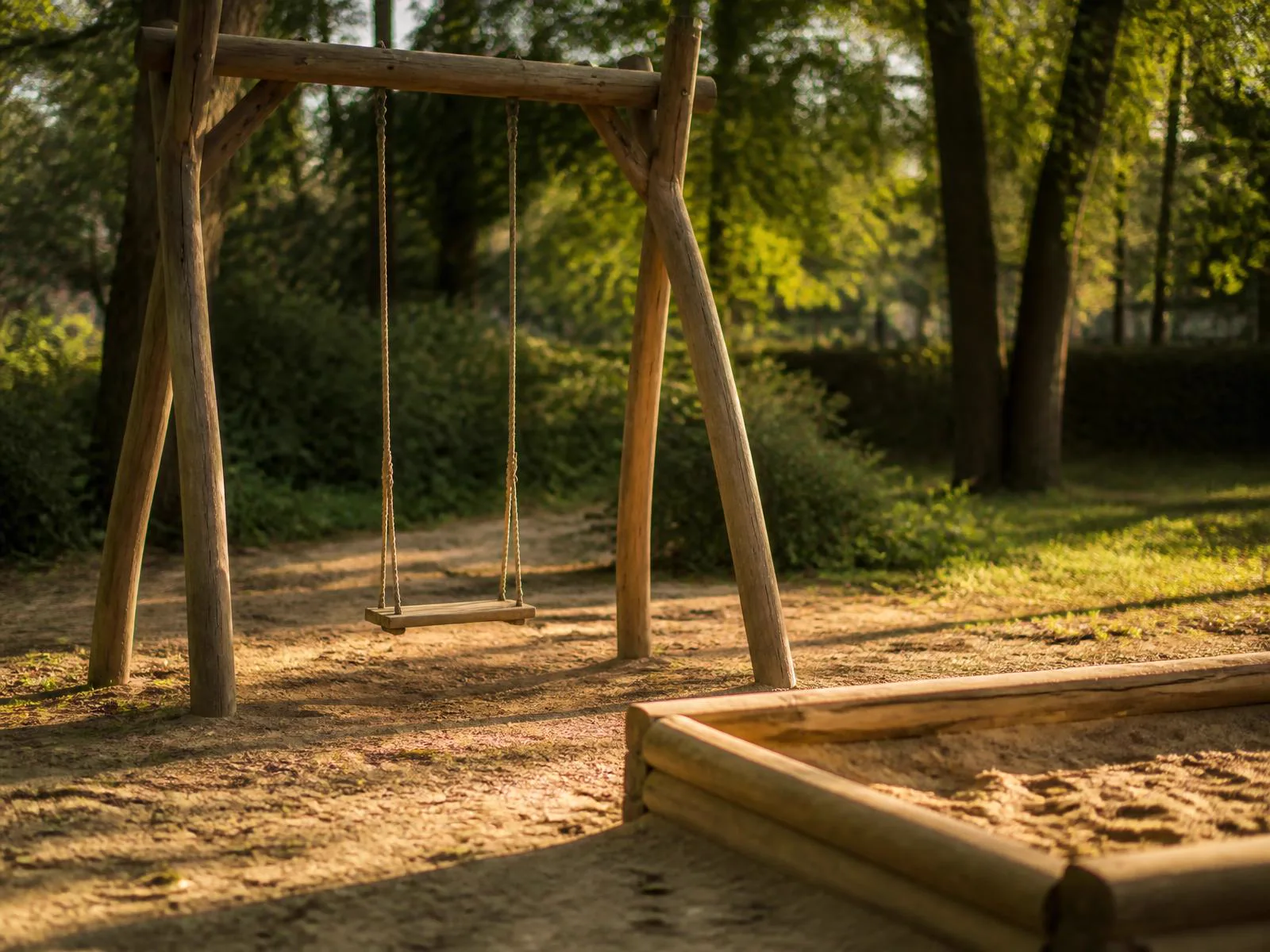
Meeting friends at the playground.
Going to horse riding.
Going to music school.
Being at a friend's birthday party.
For many children, these are simply ordinary parts of growing up.
For a child with a disability, though, one crucial question can lie behind these seemingly ordinary leisure activities:
Who is going to go with my child?
Perhaps the child could take part in children's gymnastics in principle – but needs someone to stay with them throughout the session.
Perhaps they would love to play football – but need support to understand what's happening or to find their place in the group.
Perhaps they can go to the playground – but not on their own.
Or they could go to a birthday party, if a familiar companion came along.
This is exactly why Freizeitassistenz (leisure support) matters so much for children with a disability.
And one option that many families don't initially think of at all can be an au pair.
Sometimes participation doesn't fail because of the child – but because of missing support
The child wants to.
The club would be open to it.
The activity is on offer.
And yet it still doesn't happen.
Because Mum can't stand by at every single leisure activity.
Dad is at work.
The siblings also need to be somewhere.
And no other companion is available.
The result:
The child doesn't take part.
Not necessarily because their disability makes it impossible – but because the necessary support is missing.
An extra familiar person in everyday family life can open up new possibilities right at this point.
What does Freizeitassistenz mean for a child with a disability?
Freizeitassistenz (leisure support) can look very different from child to child.
Some children simply need someone to accompany them there and back.
Others need someone who stays with them for the whole activity.
Perhaps the child needs support with orientation.
With communication.
With contact with other children.
With understanding rules.
Or simply a familiar person who provides reassurance.
That's why Freizeitassistenz looks different for every child.
Some families call it Freizeitbegleitung, others Individualbetreuung: what is meant is one person who is there for this one child in that hour.
In family life, Freizeitbegleitung merges into everyday support — the way to the club counts as much as getting changed beforehand and the pick-up afterwards.
And that's exactly what makes it valuable:
It isn't about creating a separate “special leisure time” just for this child.
It's about enabling them to take part in the perfectly ordinary leisure life of other children.
An au pair can provide this support as Freizeitassistenz
A well briefed au pair looking after a child with a disability can take on this kind of support as part of their childcare duties.
Whether you call it everyday support, Freizeitbegleitung or Individualbetreuung: an au pair does not replace a granted benefit, but it can provide the company that is otherwise missing from the day.
For example, going to:
Children's gymnastics,
Football training,
Horse riding,
Music lessons,
Swimming,
The playground,
Meeting other children,
A holiday programme
or other leisure activities.
Perhaps the au pair travels with the child by bus and train to get to sport.
Perhaps they go together by bicycle.
Or – once driving licence, driving experience, insurance and all other requirements have been sorted out – by car.
In doing this, the au pair does not take on the role of coach, therapist or teacher.
First and foremost, they are simply the familiar person at the child's side.
“That's just not possible” can turn into “Let's give it a try”
Imagine a child who really wants to go to children's gymnastics.
The gymnastics group itself would be suitable.
But the child needs one-to-one support.
So Mum would need to stay in the hall every single week.
At exactly the same time, the sibling has football training.
So, up to now, children's gymnastics simply hasn't worked.
With an au pair, the family can split up.
The au pair goes along to children's gymnastics.
Mum takes the sibling to football.
And suddenly both children can pursue their hobbies.
To us, this is a really important part of relief:
It's not just Mum and Dad who get support.
New possibilities open up for the children too.
The au pair can become a bridge-builder
Freizeitassistenz also sometimes means more than simply being present.
Especially for children who find it hard to make social contact, a familiar person can help build bridges to other children.
At the playground, this could look quite simple:
“Come on, let's ask the other children if we can join in.” (Translated)
Or:
“Shall we take the ball over together?” (Translated)
The au pair can start a game together with the child and then gradually step back.
They can help explain a situation.
Bring other children into the game.
Or give the child reassurance if they don't know how to make contact.
The aim should always be:
as much support as necessary – and as much independence as possible.
Communication can be supported too
Perhaps the child doesn't speak, or only speaks a little.
Perhaps they communicate with a talker (a speech-generating device).
With signs.
With picture cards.
Or in their own individual way.
If the au pair learns this form of communication during their briefing, they can of course also support the child with it during leisure activities.
They can hand over the talker.
Give the child time to respond.
Use a sign the child knows.
Or explain to other children how they can get in touch with the child.
This, too, can make participation easier.
An au pair cannot create friendships – but it can create the chance for them
This is an important distinction.
Of course, no au pair can guarantee that a child will automatically make friends.
But they can make possible the situations in which friendships can arise in the first place.
Going to the same playground regularly.
Children's gymnastics every week.
Being part of the football club.
Having an ice cream with other children after music lessons.
Going along to a playdate.
Children need encounters for relationships to develop.
And sometimes a child with a disability simply needs someone who makes these encounters possible.
Perhaps even the birthday party suddenly becomes possible
For many families, an invitation to a birthday party is something lovely.
But for a child with higher support needs, the next question can arise immediately:
Can my child stay there on their own?
Do the other parents know their needs?
Who will help them if they need support?
After discussion with the hosting family, one option in certain situations can be for a familiar companion to come along.
This may take away some uncertainty from the other parents.
But above all, it gives the child the chance to be part of the group.
Freizeitassistenz relieves the parents at the same time
Naturally, this kind of support has a second effect too.
While the au pair is at children's gymnastics with the child, Mum can work.
Spend time with a sibling.
Go shopping.
Attend another appointment.
Or actually have an hour to herself for once.
So the au pair doesn't just create participation for the child.
At the same time, they create relief for the family.
Siblings in particular benefit from an extra companion
In families with several children, a logistical problem often arises:
Two children have different needs at the same time.
The child with a disability needs a companion.
So does the sibling.
Without support, one of the children has to miss out – or the parents have to organise complicated solutions week after week.
With an au pair, there is one more person available.
Mum takes one child to football.
The au pair takes the other to children's gymnastics.
Dad stays a bit longer at work.
Or the arrangement is swapped round the following week.
Suddenly there are more ways to do justice to all the children.
Freizeitassistenz can also be entirely unspectacular
Not every form of participation needs a club.
Sometimes Freizeitassistenz simply means:
going to the playground with the child.
Feeding the ducks.
Taking the bus.
Getting an ice cream.
Going to the library.
Drawing outside with chalk.
Going to the football pitch.
Visiting a friend.
Riding a scooter in the park.
An older child without a disability might well already do some of these things without their parents.
A child with a disability may still need a companion.
An au pair can give them a bit of age-appropriate leisure time away from the constant company of Mum and Dad.
The au pair first needs to get to know the child well
Especially with a child with a disability, Freizeitassistenz should not begin on the second day after arrival.
The au pair first needs to understand:
How does the child communicate?
Where do they need help?
What can they do themselves?
Which situations overwhelm them?
How do they behave in traffic?
Can they assess danger?
What calms them down?
What do they enjoy?
So here, too, the same principle applies:
show – do together – accompany – gradually hand over responsibility.
Perhaps Mum, the child and the au pair go to children's gymnastics together for the first few times.
Then the au pair increasingly takes over.
And at some point Mum says:
“The two of you know the way and how it works now. From next week, you can do this on your own.” (Translated)
An au pair is not a therapist – leisure time should be allowed to stay leisure time
Especially for children with a disability, everyday life often already consists of many support and therapy appointments.
Speech therapy (Logopädie).
Occupational therapy (Ergotherapie).
Physiotherapy.
Early intervention (Frühförderung).
Doctor's appointments.
SPZ (a specialist paediatric social centre).
That's why one idea matters to us all the more:
Not everything has to be therapy.
At the playground, playing is allowed to just be playing.
In football, the ball is allowed to just go in the goal.
In riding, the horse is allowed to just be fun.
And when baking, the result is allowed to go wrong sometimes.
An au pair can therefore also be a completely different kind of person for a child to relate to:
Not a therapist.
Not a teacher.
Not Mum.
But perhaps a bit like a big sister or big brother, a friend for a while, someone to simply do things with.
Participation happens right in the middle of everyday life
When we think about inclusion, we often think of big structures.
Inclusive schools.
Inclusive nurseries.
Accessibility.
Assistance services.
All of that matters.
But participation for children with a disability happens just as much on a Tuesday afternoon at the playground.
At the football club.
At a birthday party.
In the riding arena.
At the swimming pool.
Over ice cream.
Or meeting other children.
An au pair cannot remove barriers from the world.
But they can be an extra familiar person for a family, someone who says:
“Come on, let's go together.” (Translated)
And sometimes this one extra person is exactly the difference between:
“I'm afraid we can't organise that.” (Translated)
and:
“Yes. You can join in.” (Translated)