When the au pair is off duty: what does free time really mean?
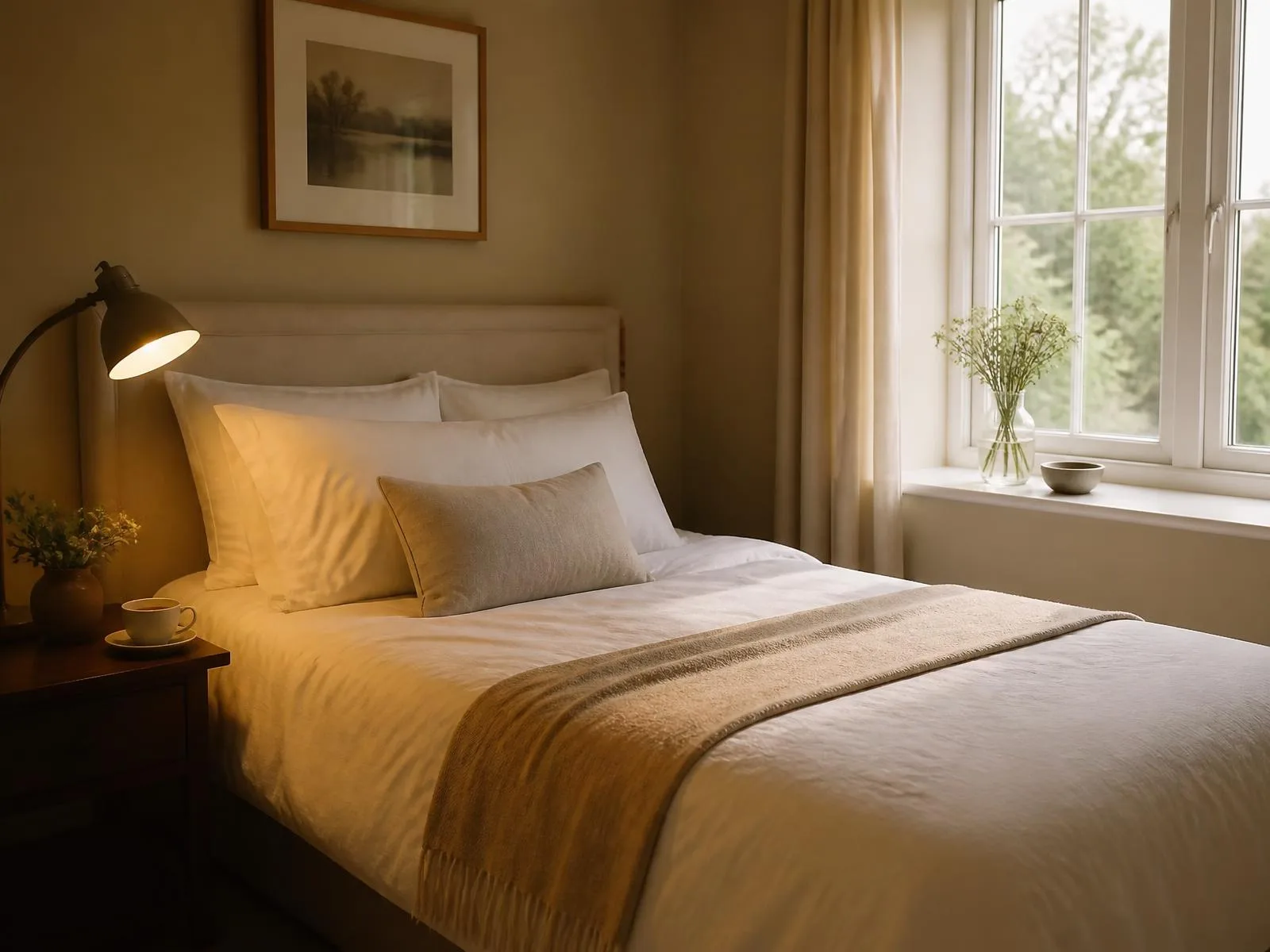
“Our au pair has the day off today – but they're lying in their room the whole day.”
“We live right next to Munich and yet they don't go into the city.”
“They could do something with us instead of constantly phoning their family.”
We hear thoughts like these from host families again and again.
And yet the answer is actually quite simple:
When an au pair is off, they are off.
Free time means that the au pair can decide for themselves how they spend it. They don't have to do anything, don't have to explore Germany, and don't have to shape their free time the way the host family might think makes sense.
If the au pair wants to spend their free Sunday in bed, spend hours on the phone with their family, or watch a series behind a closed door, that is completely fine.
Because doing nothing is free time too.
What does free time mean for an au pair?
Free time generally begins when the au pair does not have to carry out agreed tasks and does not have to be available to the host family.
They can leave the house.
They can meet friends.
They can go to sport.
They can go into town.
They can sleep.
Or they can simply stay in their room.
What matters is this:
The au pair decides for themselves what to do with their time.
That is precisely what distinguishes free time from working time.
“But she's in her room all day”
This particular point unsettles some host families.
They may have had a completely different picture of the au pair year:
The au pair heads into Munich at the weekend, visits castles, travels around Germany, meets other au pairs and discovers Europe.
And instead?
Door closed.
Phone on.
Bed.
Netflix.
Perhaps a three-hour phone call with Mum on top.
That isn't automatically a problem.
Many au pairs are very young people who, before arriving, had never had an ordinary working routine and are living far from their family for the first time.
Their own room is an important retreat
The au pair's room is often the only place where the au pair can truly be completely by themselves.
The whole of the rest of everyday life takes place within someone else's family.
A different language.
A different culture.
Different habits.
Children.
Tasks.
A language course.
New friends.
Constantly listening, understanding, translating, reacting and learning.
This can be incredibly tiring, especially in the first few months.
Their own room then becomes a safe retreat.
And that is a good thing.
An au pair is allowed to close the door and need some quiet.
An au pair does not have to use their free time “meaningfully”
Host families should try not to judge how their au pair spends their free time.
“You could go on a trip today, though.”
Of course, you're welcome to offer a suggestion.
“If you feel like it: there's a lovely festival in town this weekend.”
Wonderful.
But that should never turn into:
“You're at home all day again already!”
once more.
Perhaps the host mother would love to go hiking on her day off.
The au pair wants to sleep for twelve hours.
Both are free time.
Why au pairs are sometimes simply exhausted on their day off
An au pair's everyday life in Germany can take a great deal of energy, especially at the start.
The au pair is present carrying out their tasks for up to six hours a day. On top of that there may be a German course.
And even outside working hours, they are still in a foreign country and often in a language they do not yet speak confidently.
For us, a conversation at the dinner table might be relaxing.
For an au pair at A1 or A2 level, it can at the same time mean:
listening, recognising words, understanding connections, thinking things through, forming a German sentence.
The brain is constantly working.
So it's no wonder that on their day off, sometimes only one thing is wanted:
Peace and quiet.
A closed door is also a boundary
Especially in families with children, it is also worth discussing what a closed bedroom door means.
At some point, children may love their au pair so much that they constantly want to be in their room.
“Will you come and play?”
“Can I just pop in?”
“Where are you?”
On the one hand, this is a wonderful sign of the bond that has grown.
On the other hand, an au pair needs privacy too.
When the au pair is off duty and withdraws to their room, parents should explain to their children:
Our au pair is off duty now. This time belongs to them.
The children's own room in the family home is the children's workplace and living space.
The au pair's room, by contrast, is the au pair's personal retreat.
“Can you just quickly …?”
This is one of the biggest traps in living together with an au pair.
The au pair is off duty.
But they are simply there.
“Can you just quickly stay with the children? I need to nip to the pharmacy for five minutes.”
“Can you just quickly help get the children dressed?”
“Can you just listen out for the baby monitor?”
“Can you quickly come down for a moment?”
A single “just quickly” might really only take ten minutes.
But if free time is constantly interrupted by such small tasks, at some point it stops being genuine free time.
That's why the host family should respect agreed free time just as much as working time.
Being required to be present is not free time
A good rule of thumb is this:
Can the au pair genuinely decide freely what to do right now and where to be?
If so, it generally counts as free time.
If, on the other hand, the family says:
“You need to stay home this evening in case the children wake up,”
then the au pair cannot freely dispose of that time.
Even if the children are already asleep and the au pair is watching Netflix on the sofa in the meantime, they are babysitting and are responsible for the children.
This time therefore counts as working time.
A family outing: free time or working time?
It's similar with family activities.
The family wants to go to the zoo on Sunday and asks:
“We'd love it if you joined us. You're off today, so of course you don't have to. If you'd rather meet friends, that's just as fine.”
That is a voluntary invitation.
It looks different if the family says:
“We're going to the zoo on Sunday. You're coming along because we'll need your help with the children there.”
In that case, the au pair is accompanying the family as part of their tasks.
A lovely setting does not automatically turn working time into free time.
What matters is not whether the activity is enjoyable, but whether the au pair's presence and support are expected.
When the au pair voluntarily joins in as a family member
Of course, living together doesn't have to be artificially split into “work” and “not work”.
An au pair is a member of the family for a while.
If they want to join the trip to the zoo, the Christmas market or the lake on their day off voluntarily, they can of course simply be part of family life like anyone else.
Then perhaps everyone takes a turn carrying a bag, someone briefly holds a jacket, and everyone looks out for one another together.
The crucial difference is this:
The au pair was invited – not rostered on for duty.
And if they say:
“Thank you, but I'd rather stay home today,”
that should be just as fine.
And what about shared meals on a day off?
Here too, it's worth talking to the au pair about the family's rules right from the start.
A family might say:
“We have dinner every evening at 6pm. Even on your day off, you're warmly welcome to join us. If you do eat with us, we'd appreciate it if you helped briefly with setting and later clearing the table, like everyone else.”
That is something different from assigning the au pair an hour of kitchen work on their day off.
Anyone who eats together as a family can also take part in the family's small shared tasks like a family member.
But these expectations should be spelled out too.
What is second nature to us is not automatically known to the au pair
The au pair has, until now, lived in their own family.
There, perhaps it's always the mother who clears the table.
Perhaps everyone eats at different times.
Perhaps there's no shared meal at all at the weekend.
And suddenly the host family expects:
“It's just obvious that everyone brings their plate to the kitchen after dinner.”
Perhaps for you.
Perhaps not for your au pair.
That's why small family rules like these should be explained.
Not, after six annoyed weeks, thinking:
“She gets that wrong every single time.”
But instead saying from the very start:
“This is how we do things here.”
Free time matters for integration too
Free time is, of course, not only about withdrawing.
It also gives the au pair the chance to build a life of their own in Germany.
Meeting friends.
Getting to know other au pairs.
Doing sport.
Speaking German.
Exploring the local area.
Perhaps staying overnight with an au pair friend in another city sometimes.
These experiences are part of the cultural exchange.
Host families are welcome to encourage this and offer tips.
But encouraging is different from prescribing.
Especially important for families with high support needs
Families with a child with a disability in particular often have a very intensive everyday life.
The temptation to involve an extra pair of hands as often as possible is understandably great.
After all, the au pair is right there in the house.
Even so, the au pair still needs reliable time to recover.
If, for example, they spend the afternoon closely supporting a child with a disability, drive them to therapy, or act as leisure support at children's gymnastics, they have been attentive and responsible for several hours.
After that, time off should really mean time off.
A rested au pair benefits the whole family
Free time is not a luxury.
It ensures that the au pair can be patient playing with the children again the next day, stay attentive, and engage with the family.
Anyone who constantly feels they could be called on or put to use at any moment eventually finds it hard to switch off at all.
That's why, in the end, everyone benefits when working time and free time are clearly separated.
Live and let live
Perhaps your au pair spends their free time quite differently from how you imagined.
Perhaps they travel every weekend.
Perhaps they're constantly out with friends.
Perhaps they love their language course and still sit over their German books in the evening.
Or perhaps their favourite free Sunday looks like this:
Door shut. Pyjamas on. Phone call with family. Watch a series. Sleep.
All of that is allowed.
Host families don't need to shape, control or judge their au pair's free time.
They just need to make sure the au pair actually gets it.
And so, sometimes the best attitude for a shared au pair year is surprisingly simple:
When the au pair is working, the family may expect clear tasks and reliability. When they are off duty, they may shape their own time – even if that simply means lying behind their closed bedroom door doing nothing at all.