Understanding au pairs from India: culture, safety, family and independence
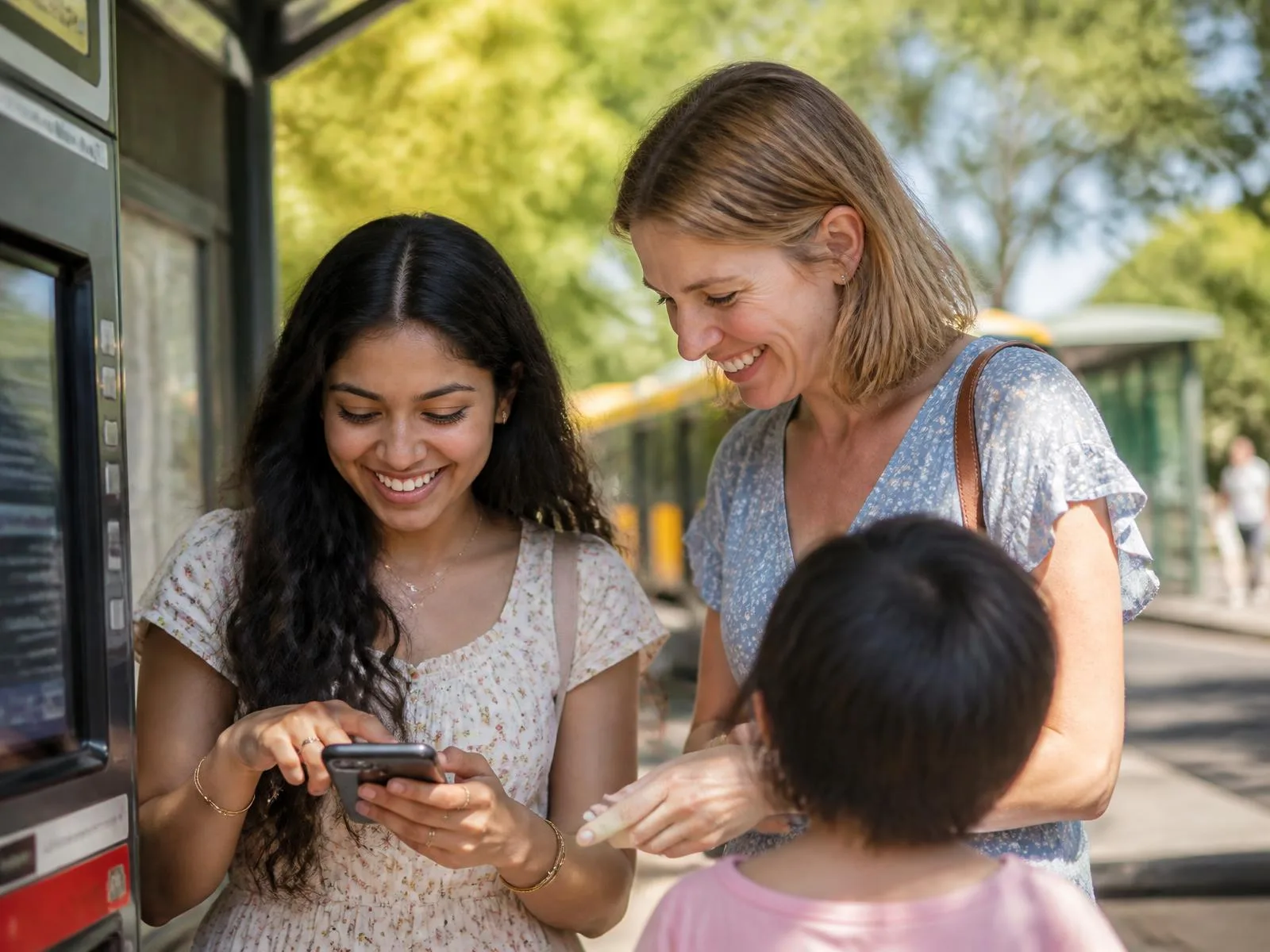
Welcoming an au pair from India into your family means not only welcoming a young person, but also encountering a different cultural upbringing.
Many behaviours that German host families first perceive as shyness, insecurity or a lack of independence suddenly make much more sense once you know the au pair's background.
One thing matters a great deal to us here: there is no single "Indian culture", and of course no single "Indian au pair" either. India is a vast and enormously diverse country. Background, family, religion, place of residence, education and personal experience shape every young person differently.
Even so, in our placement work we repeatedly come across certain cultural differences that we like to prepare host families for.
Safety may well be learned in a completely different way
"We'd like an independent au pair." (Translated)
We hear this sentence from host families very often.
What is usually meant is this:
The au pair should be able to take the bus and train independently, attend a language course alone, explore the city at weekends, meet friends, or head off somewhere spontaneously.
For us in Germany, that sounds like a matter of course for a young adult.
For an au pair from India, though, it can be anything but.
Depending on their background and family circumstances, young women sometimes grow up considerably more sheltered. Parents keep a close eye on where their daughters are, who they are meeting and when they will be home again. Being out and about alone, or using public transport in the evening, can be viewed very differently within the family than it would be in Germany.
This need not reflect any lack of independence.
It can simply mean:
What we in Germany regard as ordinary freedom can, for someone who grew up differently, initially trigger uncertainty.
Try imagining the situation the other way round
You travel to India for the first time.
You don't know the area, you barely speak the local language, you don't understand the transport system, and you have no way of judging which areas are safe.
Would you, as a matter of course, hop on some bus alone on your second day and get off wherever?
Probably not.
Someone might even say to you:
"Please don't just do that. Let someone explain first how things work here." (Translated)
This is exactly the change of perspective we sometimes hope for from our host families too.
Germany is familiar to us. For a newly arrived au pair, it is not.
Independence is allowed to grow
That's why we recommend to families, especially in the first few weeks: show rather than assume.
Travel to the language course together with your au pair.
Take the bus or train together.
Show them how to buy tickets, which apps you use, and where the stops are.
Walk around the neighbourhood together and point out the supermarket, the pharmacy, the bank, cafés and other important places.
Also explain what is entirely normal in Germany: going for a walk alone, meeting friends, or using public transport.
What is second nature to you doesn't have to be second nature to your au pair.
The goal, of course, should still be that the au pair increasingly manages these journeys independently after a settling-in period.
Support at the start doesn't mean permanently doing everything for a young person. It creates the foundation on which independence can grow.
Free time can look different too
Different expectations can also clash when it comes to spending free time.
Some of our applicants from India, for example, don't drink alcohol or smoke. Depending on family and personal background, relationships, parties, staying overnight at friends' houses or going out late may so far have played little or no role at all.
Then the au pair arrives in Germany, and the host family wonders:
"Why doesn't she go out partying at the weekend?" (Translated)
"Why doesn't she meet up with friends all the time?" (Translated)
"Why does she prefer sitting at home?" (Translated)
Here too: this doesn't have to be a problem.
An au pair stay doesn't mean that every young person has to spend their free time in the same way.
Perhaps the au pair needs time at first. Perhaps the cinema, cafés, walks, church, sport or meeting other au pairs are closer to their idea of free time. And perhaps much of this will develop only as they feel increasingly settled in Germany.
Why the pocket money isn't always meant for Starbucks and the cinema
Money is another area where we occasionally see misunderstandings.
Host families see the monthly pocket money and understandably think:
"Our au pair can use that to do something at the weekend, have a coffee, go shopping or go to the cinema." (Translated)
The au pair themselves, though, may have an entirely different plan for that money.
For some applicants, the costs around preparation and travel were initially covered by their family, or financed with borrowed money. Depending on individual circumstances, things such as language learning and exams in the home country, documents, fees for a partner agency there, or the journey to Germany can represent a real financial burden.
For families with a considerably lower disposable income, such amounts can be substantial.
An au pair may therefore already have decided, before ever leaving home:
I will use part of my pocket money to pay some of this back, or to support my family financially.
This is often completely invisible to the host family.
All they see is an au pair who, despite receiving pocket money, spends barely any of it on leisure.
So you shouldn't automatically think:
"She isn't integrating." (Translated)
Perhaps this young person is simply setting different financial priorities.
That said, it's equally important that, despite any financial commitments, the au pair should still have the chance to take part in social and cultural life in Germany. After all, the au pair stay is meant to be a cultural exchange too.
Family often holds a very important place
For some young people, the decision to come to Germany is not a purely individual one.
The family is involved in the decision, supports it, organises it, and may help finance parts of the preparation. As a result, the bond with the family can remain very strong throughout the stay.
Regular phone calls home, or a strong sense of responsibility towards parents and siblings, can therefore be part of everyday life.
A host family should try to understand this too, before judging it.
Want a particularly independent au pair? Then ask about experience.
Cultural background, though, is only one part of a person's character.
If it matters a great deal to you as a host family that your future au pair is already very independent, you should ask specific questions when getting to know each other.
One of our favourite questions is:
"Have you ever lived away from your parents for an extended period?" (Translated)
Some applicants, for example, had to leave their home region for a language course, university or vocational training, and lived for several months or even a year in a hostel or other accommodation.
That's valuable information.
Anyone who has already lived apart from their family for a longer stretch has probably already had to organise a great deal for themselves:
Shopping, meals, laundry, appointments, money, daily routine, transport, and living alongside other people.
This doesn't automatically mean that this au pair is a perfect match for your family, of course. But it gives you extra clues about how much everyday independence a young person has already had the chance to learn.
Don't just ask: "Are you independent?" (Translated)
Almost every au pair will answer this question with "Yes".
Specific questions are far more revealing:
- Have you ever lived alone, or in a hostel?
- How long have you previously been apart from your family?
- How do you currently get to your language course or to work?
- Do you use public transport by yourself?
- Do you cook for yourself?
- Do you do your own laundry?
- How do you organise your appointments?
- What do you do if you don't know your way around in a new place?
- Have you ever travelled to another city on your own?
- How do you picture spending your free time in Germany?
The answers will tell you far more than a simple "Yes, I am independent".
Don't judge — understand, and let it develop
Perhaps the most important idea for host families is this:
A different upbringing does not mean less suited.
An au pair who doesn't yet travel alone by train to the nearest big city on their first weekend can, just a few months later, quite naturally attend their language course, meet friends and organise their own free time.
An au pair who doesn't spend their pocket money on shopping isn't automatically unsociable.
And an au pair who is more cautious at the start isn't automatically lacking in independence.
At the same time, a host family is of course entitled to have certain requirements.
If you know that your family situation requires a young person who must be particularly independent, confident or assertive from day one, then that should already play an important role when you're getting to know one another.
Not every personality suits every family.
And that is exactly why getting to know each other in person matters so much.
Our tip for the first few weeks
Give your au pair orientation first, before expecting independence.
Show them the way once.
Take the bus together once.
Explain the ticket system once.
Go to the language course together once.
Show them the local area.
And then hand over responsibility step by step.
Because integration doesn't mean that a young person does everything exactly the way we do on day one.
Integration means that we learn to understand one another — and that a country which was at first unfamiliar gradually, step by step, becomes a place where a young person can move around safely and independently.