The au pair on the family holiday: work or free time?
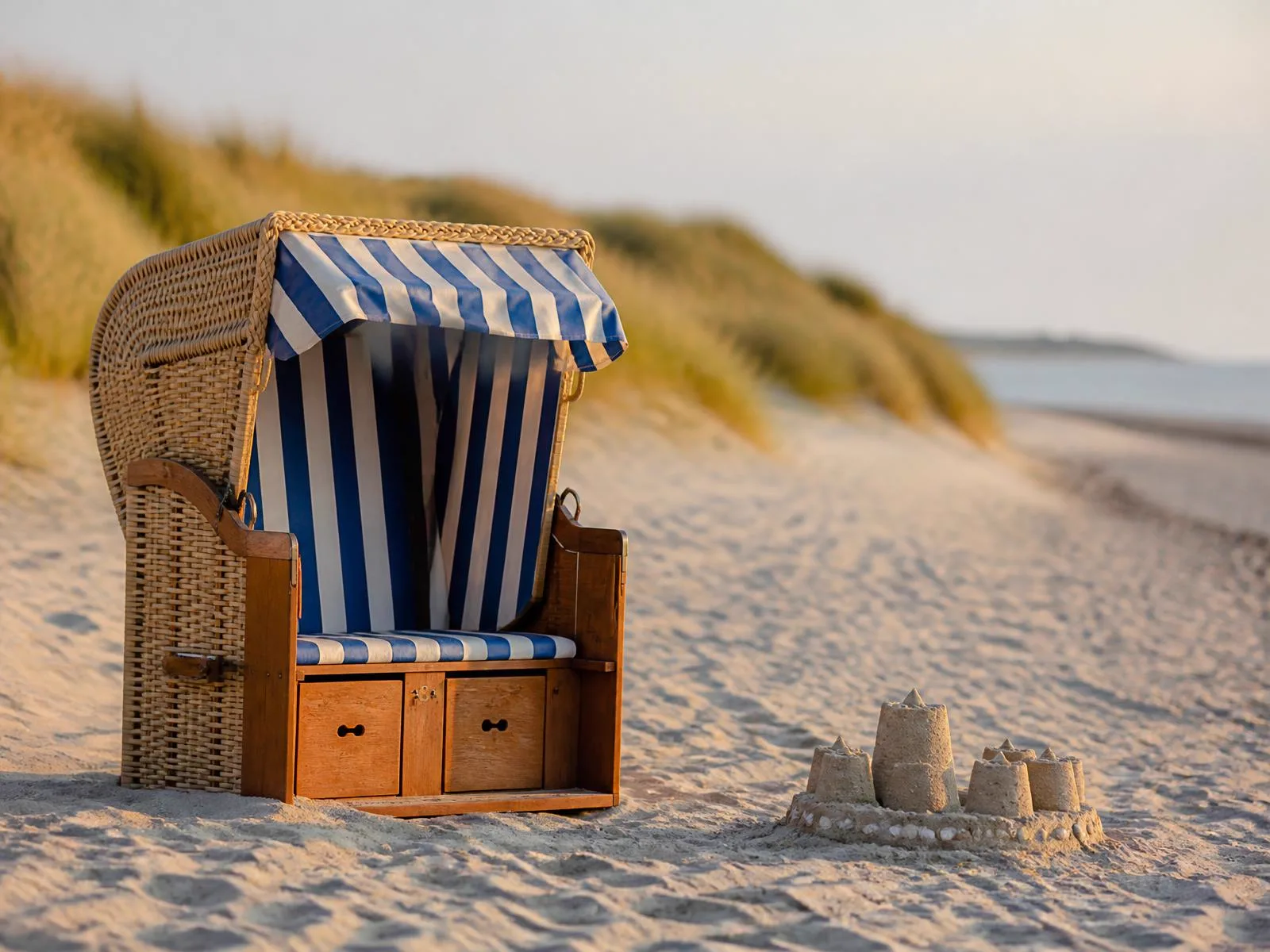
Summer holiday with the children. A week at the North Sea. Two weeks in a holiday house in Italy. Camping with the whole family. Christmas at Grandma and Grandpa's.
And the au pair?
Can they come along? Must they come along? Is a family holiday with the au pair automatically a holiday for the au pair too? And what happens if the host family goes away and the au pair stays at home?
Especially for families with several children or a child with a disability, taking the au pair along on the family holiday can be incredibly valuable.
But one important boundary needs to stay clear:
A change of location doesn't turn working time into free time.
If the au pair looks after children on holiday, accompanies them, or must be available to the family at certain times, they are working – even if the workplace this time is by the sea, on the campsite, or at the family hotel.
Is an au pair allowed to come on the family holiday?
Of course.
An au pair can accompany their host family when travelling and on the family holiday.
For many families, this is even a wonderful experience. The au pair gets to know other regions or countries, spends time with their host family, and experiences a completely different side of family life.
What matters, however, is the role in which the au pair travels along.
Are they coming because the family needs their support with childcare?
Then, during the corresponding childcare times, this is working time.
The Bundesagentur für Arbeit (Federal Employment Agency) makes this explicitly clear: a family holiday only counts as the au pair's own holiday if, at most, insignificant tasks are taken on and there is no obligation to be present.
Childcare remains childcare – even by the pool
Let's imagine the family spends two weeks at a family hotel.
In the morning, the au pair accompanies the children to breakfast.
Afterwards, they go to the pool with one child.
In the afternoon, the au pair takes over childcare for two hours while the parents relax.
In the evening, they watch the children while Mum and Dad go out for dinner.
Of course, the au pair is also at the holiday destination.
But during these times, they are not off duty.
They are working.
The framework conditions of the au pair programme continue to apply during the family holiday too. The tasks, including childcare, must in principle not take up more than six hours a day and 30 hours a week.
A family holiday is not automatically the au pair's holiday
This is probably the most important sentence in this article.
Just because the host family is on holiday doesn't mean the au pair is automatically on holiday too.
And conversely, the au pair's holiday days don't automatically turn into working time just because they are travelling together with the family.
What matters is:
Can the au pair genuinely decide how to use their own time?
If the family says, for example:
"You have the whole day off today. We'll look after the children. Do whatever you like" (Translated),
this can be free time or – depending on the planning – the au pair's holiday.
If, on the other hand, it is fixed that:
"From 10 a.m. to 2 p.m. you'll go to the pool with the children" (Translated),
this period is working time.
Especially with a child with a disability, an au pair can transform the family holiday
For families with a child with a disability, an au pair on holiday can be of particularly great value.
That's because holidays don't automatically mean rest for the parents of a child with a high level of support needs.
The child still needs their support.
Perhaps they can't sufficiently judge risks.
Perhaps they can't move around the hotel grounds on their own.
Perhaps they need a familiar companion or one-to-one support while playing.
While other parents lie by the pool, Mum and Dad may therefore be just as watchful as they are at home.
With a well-trained au pair, this can change.
Finally lying by the pool – even though the child is well looked after
Perhaps the family says:
"From 10 to 12 today you'll take our son to the children's area, and after that I'll take over again." (Translated)
The au pair knows the child.
They know their communication, their routines, and what to watch out for.
Meanwhile, the parents can genuinely lie by the pool for once, read a book, or have a coffee together.
For two hours, they don't have to simultaneously wonder:
Where is my child? What do they need? Who is watching them?
That sounds like a small thing.
For some families, that alone can mean, for the first time in a long while:
Holiday actually feels a bit like a holiday.
Au pair as leisure support on the family holiday
Especially on holiday, the au pair can also be valuable as leisure support (Freizeitassistenz) for a child with a disability.
A campsite is a lovely example of this.
The siblings might head off five minutes after arriving.
They find other children, ride bikes, go to the playground, or meet up at the water slide.
A child with a disability may not be able to do this independently.
They need someone to go along with them.
The au pair can say:
"Come on, let's go too." (Translated)
Together to the playground.
To the slide.
To the children's programme.
To get an ice cream.
To meet other children.
Perhaps to play ball together.
The child doesn't have to sit with Mum and Dad the whole time simply because they can't walk around the campsite alone.
An additional, familiar companion can enable participation on holiday too.
The au pair can also take on the siblings
Of course, the au pair doesn't always have to look after the child with a disability.
Perhaps the parents specifically want to spend time with this child while on holiday.
Then the tasks can simply be swapped around.
Mum goes swimming with the child with a disability.
Meanwhile, the au pair takes the siblings to the playground.
Dad does something with one child.
The au pair stays with the others at the pool.
On holiday, too, the big advantage often isn't that the au pair replaces a parent.
It's that there is suddenly an extra person, allowing the family to split up tasks.
Travelling with the au pair costs more – but can bring a lot of relief
Of course, extra costs arise when an au pair travels along on the family holiday.
They need accommodation, or rather suitable lodging, meals, and the journey has to be organised accordingly.
Nevertheless, some families deliberately choose to do this.
Because the extra person can ensure that the parents, too, get small periods of rest during the family holiday.
Especially with several young children or a child with a disability, this added value can be enormous.
And what if the host family travels without the au pair?
Of course, a family can also say:
"This time we're going on holiday on our own." (Translated)
That's completely fine too.
In that case, though, the au pair should be told in good time.
That way, they can think about how they would like to spend this time themselves.
Perhaps they visit friends in another city.
Perhaps they plan a little trip of their own.
Perhaps they stay overnight with an au pair friend.
Or perhaps they say:
"Perfect. I'll just stay at home and enjoy a few quiet days." (Translated)
That's allowed too.
Accommodation and meals must continue to be guaranteed
If the host family travels and the au pair stays at home, the host family's home naturally remains the au pair's place of residence too.
During the au pair placement, the host family provides accommodation and meals free of charge.
This should therefore be organised practically before departure.
Perhaps the shopping is done together and the fridge is filled accordingly.
Or the family makes a different clear arrangement so that the au pair continues to be adequately provided with food while they are away.
Not:
"We're away for two weeks. See how you manage." (Translated)
But rather, here too:
talk to each other beforehand and plan sensibly.
Holiday means: the au pair can decide how to use their time
If these days are agreed as the au pair's holiday, they must genuinely be off duty.
They can sleep in.
Stay in their room all day.
Visit friends.
Take the train or coach to another city.
Stay overnight with a friend.
Explore Germany.
Or simply do nothing at all.
Holiday means that the au pair can shape their own time.
“Since we're away, you could look after the dog”
This is exactly where a distinction needs to be made.
If the family says:
"You're on holiday this week, but you have to feed the dog morning and evening, so you can't be away overnight" (Translated),
then that is not unrestricted, freely available holiday.
Because tasks and an obligation to be present suddenly still exist.
The same applies if the au pair is meant to stay at home because the cat needs looking after or certain tasks for the family need doing every day.
The Bundesagentur für Arbeit draws exactly this line when it comes to family holidays: the au pair's own holiday only exists if, at most, insignificant tasks arise and there is no obligation to be present.
A host family should therefore organise a different solution for pets or other necessary tasks if the au pair is genuinely meant to have a holiday.
How much holiday does an au pair get?
For an au pair stay of twelve months, there is an entitlement to four weeks of paid annual leave.
For a shorter period of employment, the au pair is entitled to two working days of leave for each full month.
These holiday days should be discussed between the host family and the au pair in good time.
Especially if the family already knows when they want to travel, it is worth planning together early.
Family holiday and au pair holiday can also be combined
Of course, a trip doesn't have to be either entirely working time or entirely holiday.
You can also plan transparently.
Perhaps the au pair travels to Italy with the family for two weeks.
In the first week, they support the family with childcare at agreed times.
In the second week, they have several completely free days and can decide for themselves what to do.
Or they work on certain days and are off duty on others.
What matters is not how the family organises it.
What matters is:
Everyone involved knows in advance when the au pair is working and when they are genuinely off duty.
A holiday with the au pair can be wonderful for everyone
Taking an au pair along on the family holiday can be a great experience.
For the au pair, it may mean getting to know a new place and experiencing special moments with their host family.
For the children, a familiar person is there with them.
And for the parents, it may create, perhaps for the first time, the chance to genuinely hand over small stretches of time even during the family holiday.
Especially with a child with a disability, this can make an enormous difference.
The child continues to get the support they need.
The siblings get attention.
The au pair can enable participation as a familiar companion or as leisure support.
And Mum and Dad get to genuinely have a bit of a holiday in between.
What matters is not the place, but the responsibility
Whether it's the North Sea, Italy, a campsite, a hotel, or Grandma and Grandpa's:
What matters for the classification is not where the au pair is.
What matters is whether they are currently taking on responsibility and agreed tasks.
Looking after children?
Working time.
Coming along as a necessary companion?
Working time.
Babysitting on a holiday evening?
Working time.
Freely deciding whether to come to the beach or do something on their own instead?
Free time.
Their own holiday with no obligation to be present?
Holiday.
So the most important rule can actually be summed up quite simply:
A family holiday is not automatically the au pair's holiday. But with fair planning, a shared holiday can become a wonderful and, at the same time, incredibly relieving time for the au pair, the children and the host parents.