The au pair and the household: which household tasks may an au pair take on?
“Is my au pair actually allowed to clean?”
“Can they do the laundry?”
“Is the au pair allowed to vacuum?”
“And who actually cleans the bathroom?”
The topic of au pairs and household tasks repeatedly leaves host families feeling uncertain. Yet the basic idea of the German au pair programme is actually quite simple:
An au pair supports the host family with childcare and with light household tasks.
But they are not a housekeeper and not a cleaner.
The Bundesagentur für Arbeit (German Federal Employment Agency) also describes an au pair's main task as supporting childcare. Alongside this, light household tasks such as helping to keep things tidy, doing laundry and ironing, and preparing breakfast and simple meals, belong to everyday au pair life.
But what does “light household tasks” actually mean in normal, everyday family life?
May an au pair help in the household?
Yes – explicitly so.
An au pair lives with their host family as a temporary family member. The Bundesagentur für Arbeit likewise explicitly describes the role not as a nanny or housekeeper, but as a family member who looks after the children and helps with light household tasks.
That is why it is entirely normal for an au pair to do more than just play with the children.
They can, for example, help with tidying up, take care of the children's laundry, empty the dishwasher, or clear the table after a meal together.
The key word is:
helping.
Which household tasks may an au pair take on?
Typical light household tasks can, for example, include:
- laying the table and clearing it after meals
- loading or unloading the dishwasher
- helping to keep the kitchen tidy
- taking on light tidying tasks
- vacuuming
- dusting
- tidying the children's room together with the children
- washing the children's laundry
- taking laundry out of the dryer
- folding children's clothes and putting them away in the wardrobes
- ironing
- preparing breakfast or simple meals
- leaving the kitchen tidy again after cooking
The Bundesagentur für Arbeit also names, among others, washing up, doing the laundry, ironing, dusting and vacuuming as examples of an au pair's light household tasks.
Is an au pair allowed to clean?
This depends on what is meant by “cleaning”.
If what is meant is:
“Could you please wipe the table after breakfast and give it a quick vacuum?”
then this can easily be a light household task.
But if what is meant is:
“Every Thursday you clean the whole house, scrub two bathrooms and three toilets, mop all the floors, and then do the windows as well”,
then we are no longer talking about an au pair's normal level of help.
An au pair does not replace a cleaner or housekeeper.
That is an important line.
The au pair is not a cheap cleaner
Of course, it can be tempting for a family:
There is now an extra adult living in the house. Why shouldn't they simply take over a large part of the housework?
Because that is not an au pair's role.
The au pair programme exists for cultural exchange. The young person lives with the family, improves their German, gets to know Germany, and in return supports the family, in particular with childcare and with light household tasks. The Bundesagentur für Arbeit likewise places cultural and language learning, together with childcare, at the centre of the programme.
Anyone actually looking for someone to clean the house for several hours a day needs a housekeeper – not an au pair.
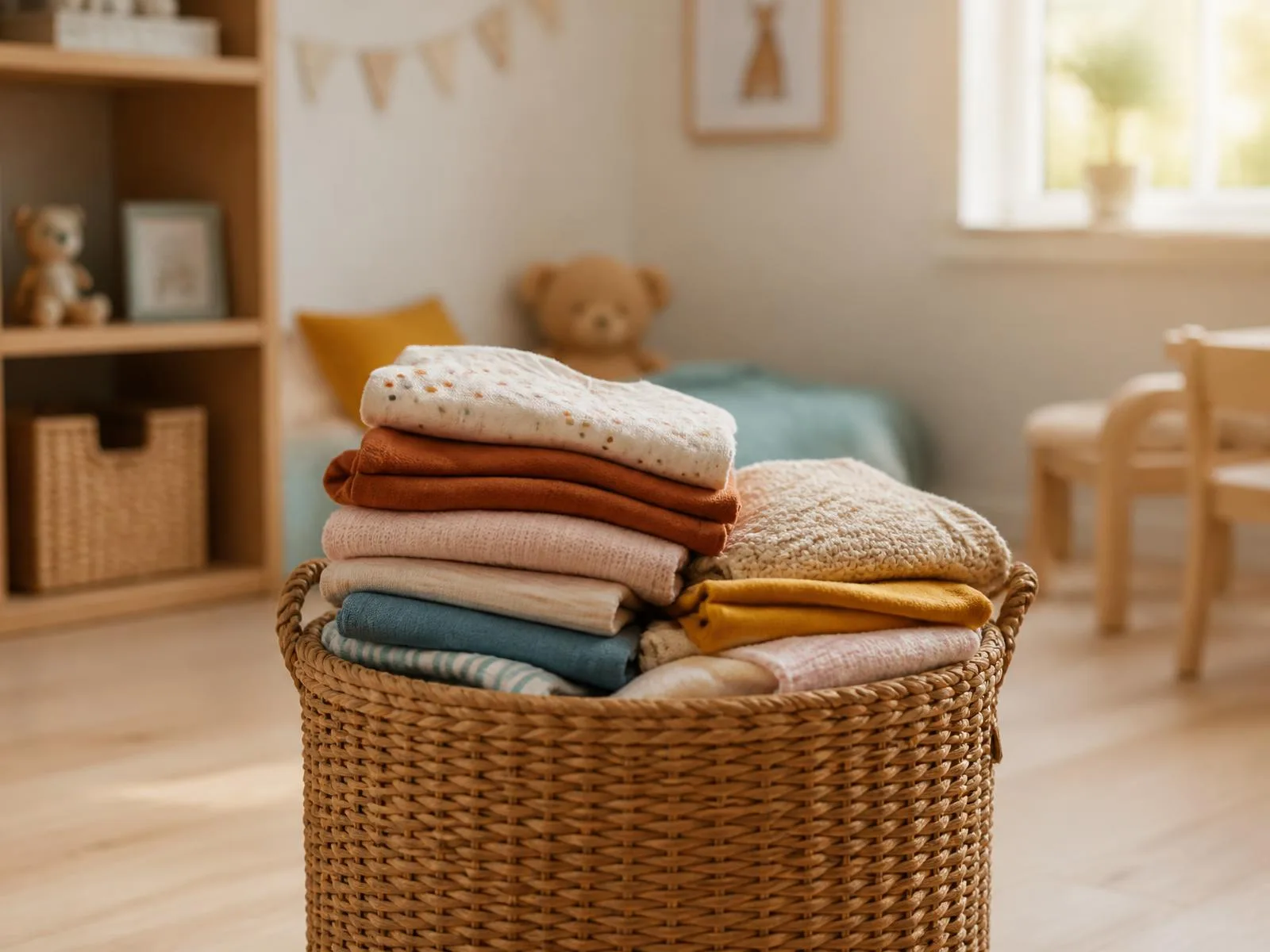
Children's laundry is a wonderful au pair task
Especially with several children, it can feel as though a new mountain of laundry appears every day.
This is somewhere an au pair can support wonderfully.
Sorting the children's laundry.
Putting the washing machine on.
Hanging the laundry up or putting it in the dryer.
Then folding it.
And putting things back in the right children's wardrobes.
These are tasks that fit well into everyday family life and can genuinely take the pressure off parents.
Even here, though, the same applies:
First show your au pair how you like things done.
Which programme is used?
What can go in the dryer?
What can't?
Where do things belong?
Doing the laundry isn't the same in every country and every household either.
Tidying the children's room – ideally together with the children
The children's room is also a typical area where an au pair can support.
But here too, at Besondere Sterne, we particularly like one idea:
The au pair doesn't have to tidy up after the children every single evening.
Instead, they can involve the children:
“Come on, before we go to the playground, let's put the Lego away together.”
That way, a household task becomes a normal everyday routine with the children at the same time.
Especially with a child with a disability, the au pair can help by practising such routines together again and again, and by providing structure.
Is the au pair allowed to clean the bathroom?
Here we would distinguish between normal shared responsibility and a fixed cleaning duty assigned to the au pair.
An au pair lives in the household and naturally uses rooms themselves.
If, for example, they share a bathroom, a family can think together about how everyone who uses it contributes to keeping the room tidy and clean.
Perhaps there is a fair division between the people who use that bathroom.
That is something different from saying:
“You're our au pair, so from now on you clean the whole family's bathrooms and toilets every week.”
An au pair is a temporary family member.
Family members are naturally allowed to play their part in keeping shared rooms tidy.
But that does not turn them into the family's cleaner.
What does not belong to an au pair's typical tasks?
A good guide is always the question:
Is this still light help within everyday family life – or would I normally employ a cleaner or another specialist for this?
A complete deep clean of the house is not part of an au pair's actual role.
Equally, an au pair should not be expected to regularly clean windows throughout the house, deep-clean the whole family's toilets and bathrooms, scrub cellars, or take on the stairwell like a cleaner.
Nursing or caregiving tasks likewise do not belong to an au pair's duties. The Bundesagentur für Arbeit makes this explicit in its au pair information sheet.
And what about the au pair's own room?
The au pair is naturally responsible for their own room.
They keep their room tidy and clean and put their personal things away.
This has nothing to do with an additional household task for the host family.
In the same way, the au pair should clear up after themselves.
Whoever makes themselves a sandwich shouldn't simply leave the board, knife, plate and crumbs for the host mum.
Being a family member also means:
everyone contributes their part to living together.
Household with a child with a disability: the au pair can take the pressure off elsewhere
This idea matters especially for families with a child with a disability.
The au pair doesn't necessarily have to take over every direct care situation for genuine relief to happen.
Perhaps the mother wants to accompany her child to therapy herself.
Meanwhile, the au pair stays at home with the siblings.
The children play.
Afterwards, everyone tidies up together.
The au pair folds the children's laundry and lays the table for dinner.
When the mother comes back from therapy, everyday family life has already moved on a good deal.
That, too, is relief.
“Do a bit of housework” is not a good task description
Especially in the first few weeks, tasks should be named specifically.
“Help out a bit around the house today” can mean anything or nothing to an au pair from a different cultural background.
Better:
“While the children are at school, please empty the dishwasher and then fold the children's laundry from the dryer.”
Then the au pair knows exactly what is expected.
It's even better to do the tasks together once at the start.
Where are the plates kept?
Which wardrobe belongs to which child?
How does the washing machine work?
Which detergent is used?
What can go in the dryer?
After that, the au pair can increasingly take on these tasks independently.
Household tasks belong in the weekly schedule too
Light household tasks are working time.
They don't come on top of the agreed childcare hours.
If, for example, the au pair helps with childcare for two hours in the morning, then does the children's laundry, and looks after the children again in the afternoon, all the agreed working hours must be considered together.
For the German au pair programme, an upper limit of six hours a day and 30 hours a week applies as a rule, including babysitting. The Bundesagentur für Arbeit also points out that the time for carrying out household duties, including childcare, is limited accordingly.
A fair division of tasks prevents conflict
Many conflicts between au pairs and host families don't arise from bad intentions at all.
They arise from different expectations.
The host family thinks:
“Of course it's obvious that they'll do that.”
The au pair thinks:
“I thought I was coming for childcare. Why am I suddenly cleaning the whole house?”
This is exactly why household tasks should already be discussed when getting to know each other, and agreed concretely again after arrival.
Host families with Besondere Sterne receive templates for their daily and weekly planning for this purpose, so that tasks and working hours can be discussed transparently right from the start.
A simple rule of thumb for host families
If you're unsure whether a household task suits an au pair, this question helps:
Does this task support normal, everyday family life together – or am I currently trying to use my au pair to replace a different kind of worker?
Folding the children's laundry?
Yes.
Tidying the kitchen together after a meal?
Of course.
Vacuuming or dusting?
That can be part of the light household tasks.
Regularly deep-cleaning the whole house?
That's not what an au pair is there for.
An au pair helps in the household – they don't run it
An au pair is there to take the pressure off a family in everyday life.
They may pitch in.
They may wash and fold the children's laundry, vacuum, help with the dishes, lay the table, tidy the children's room and prepare simple meals.
But they don't move in as a cleaner.
The difference often doesn't lie in a single task itself, but in the scale and the expectation behind it.
And that is exactly why the best foundation, when it comes to the household too, is:
clear tasks, fair expectations, and the awareness that an au pair is a temporary family member – not a housekeeper.