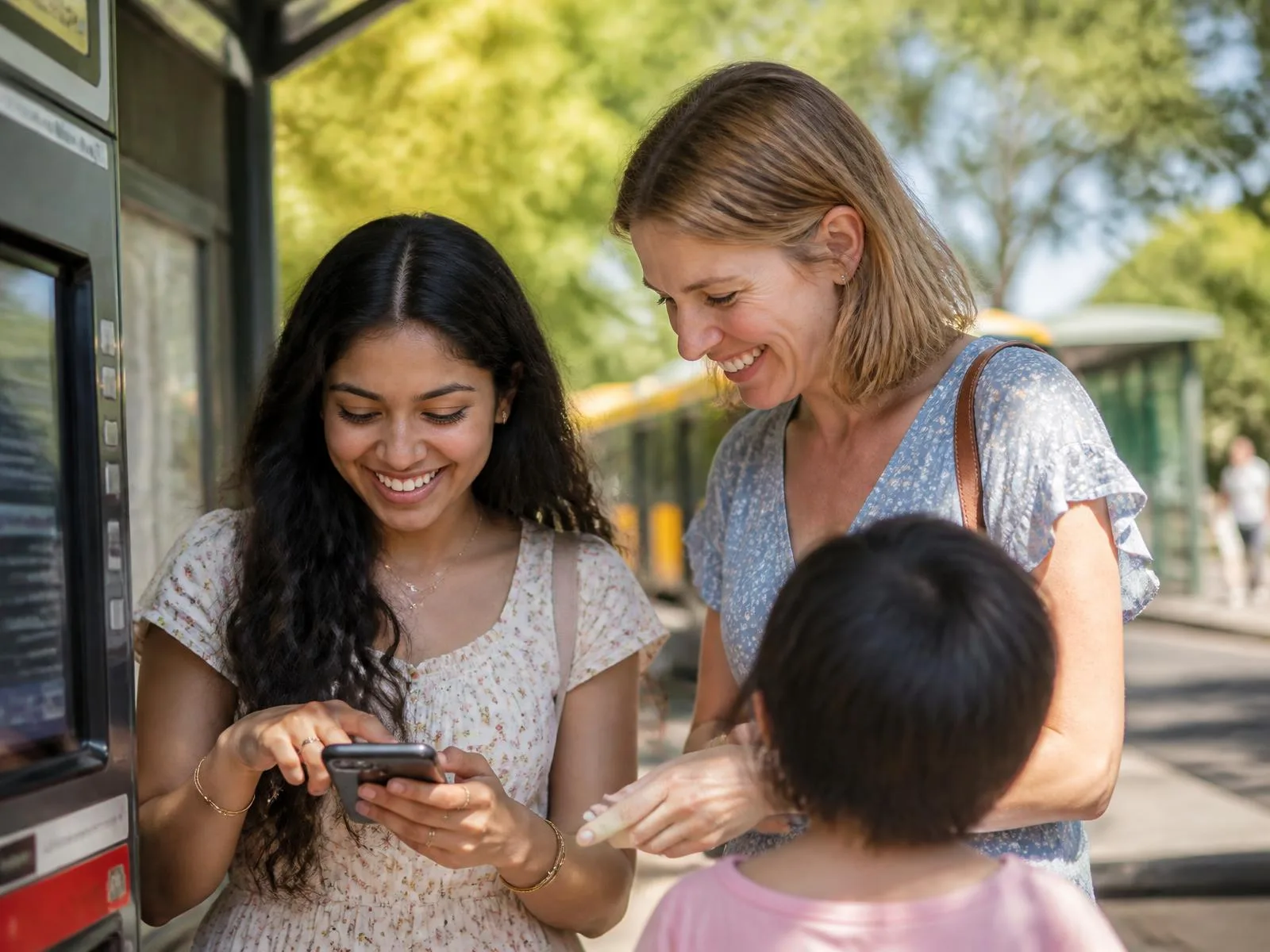
Au pair and childcare: playing, accompanying and enabling participation in everyday life
What does an au pair actually do with the children all day?
The answer can be incredibly varied.
An au pair might help with the start of nursery in the morning, sit at the playground in the afternoon, do homework with a school-age child, practise communication with a child with a disability, accompany a child to children's gymnastics, or play football in the garden with the children.
Because childcare through an au pair means far more than simply "keeping an eye on the children".
Especially for families with several children or a child with a disability, an au pair can become an additional trusted person who has time, in everyday life, for exactly the things parents sometimes lack the hands for between school, work, the household, therapies and appointments.
Which children may an au pair look after?
Au pairs can support families with children of very different age groups.
Of course, looking after a toddler looks completely different from accompanying a ten-year-old schoolchild.
With a small child, it might be about:
playing together, looking at books, getting dressed, having breakfast, going to the playground, or a spin on the balance bike.
With a school-age child, homework, leisure activities, accompanying the school run, board games, crafts, or the trip to the sports club can be added.
And with a child with a disability, quite different priorities can come to the fore.
That's exactly what makes au pair support so individual.
Playing is one of an au pair's most important tasks
Playing sounds, at first, like leisure time.
For children, though, playing is an essential part of their development.
The au pair can, for example:
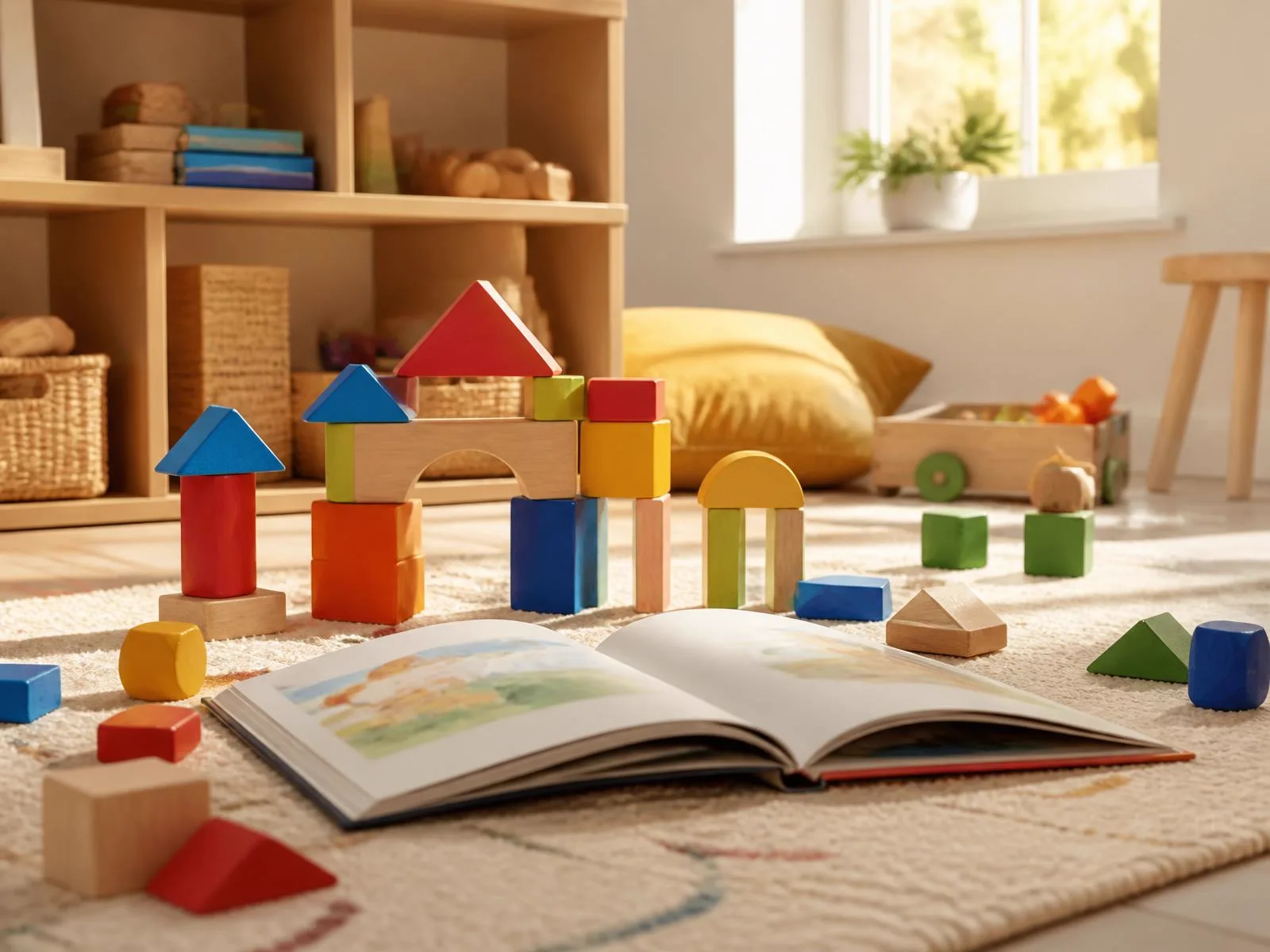
- play with Lego, Playmobil or building blocks
- do jigsaw puzzles and play board or card games
- draw and do crafts
- look at books and read aloud
- play make-believe games
- bake together
- play football in the garden
- go to the playground
- ride a bike or scooter
- go on trips to the park
- listen to music or dance together
- offer age-appropriate learning games.
Especially when parents have several children, something incredibly valuable emerges from this:
Time.
While Mum helps one child with homework, the au pair can play with the younger child.
While Dad is at the doctor's with one child, the au pair can go to the playground with the siblings.
The family can split up.
Educational games with the au pair
An au pair is not a trained early-years educator. Even so, they can naturally weave educationally valuable games and activities into everyday life.
Sorting colours.
Playing memory games.
Practising numbers.
Counting together.
Matching pictures.
Kneading dough or playdough.
Doing crafts.
Telling stories.
Getting to know quantities while baking.
Naming animals, plants or vehicles on a walk.
Many of these things happen playfully in family life anyway.
Host families can show their au pair, especially during the settling-in period, which activities their children enjoy and which games work particularly well.
Au pair and a child with a disability: playing without pressure to perform
Especially with a child with a disability or a child with additional needs, playing together can look quite different again.
Perhaps the child doesn't play the way the au pair knows from a previous placement or from other children.
Perhaps they occupy themselves with the same object for a long time.
Perhaps they need repetition.
Perhaps they communicate little through spoken language.
Perhaps they need support to find their way into a shared game at all.
The au pair doesn't have to turn this into a therapy session.
They are simply allowed to learn:
How does this child play? What brings them joy? How can I find a way in?
Supporting communication in everyday life
With children with a disability, the au pair can also pick up the forms of communication already used within the family in everyday life.
Perhaps the child uses a talker (an electronic communication aid).
Perhaps they communicate using signs.
Perhaps the family uses picture cards.
Perhaps the child needs more time to respond to a question.
The host family can show this to their au pair.
The au pair can then use these same communication methods while playing and in everyday life.
The boundary remains important:
The au pair does not take on speech therapy or logopaedics.
But they can, of course, use and encourage whatever the child already uses to communicate in everyday life.
Au pair and therapy: accompanying, not treating
Many children with a disability have regular appointments for occupational therapy, speech therapy, physiotherapy, equine-assisted therapy or other therapeutic services.
Here, too, an au pair can be a great organisational relief.
They can, for example, accompany the child to therapy, provided this is suitable for the child and the family.
They can watch a therapy session if this has been agreed with the therapeutic professional.
And they might even pick up suggestions along the way:
"You could try this game at home too."
The au pair can then pick up such playful exercises again in normal everyday life.
That doesn't make them a therapist, though.
Therapy remains the task of the relevant professionals.
May an au pair take my child to school?
Accompanying the school run is also something an au pair can be part of in family life.
The au pair can walk a child to school in the morning, take the bus together, or – if all the requirements are met and the family has agreed to it – take on driving.
Especially for a child with a disability, this accompaniment can be important if they cannot manage the school run independently.
The au pair takes the child to school and picks them up again later.
This is accompanying the journey.
Accompanying the school run is not the same as school-based support
Host families should keep these two terms apart, however.
Accompanying the school run means: the au pair accompanies the child on the way to school and back home again.
A Schulbegleitung (a school-based support worker), by contrast, accompanies a child during lessons or throughout the school day and is an independent support service in its own right.
The normal au pair programme therefore does not automatically replace professional, approved school-based support.
But an au pair can provide enormous relief around school and the school run.
Homework with the au pair
Homework support through an au pair is also possible.
That doesn't mean the au pair has to be a tutor.
They can simply sit alongside.
Remind the child of tasks.
Listen while they read.
Test vocabulary.
Create a calm learning atmosphere.
Or make sure a sibling is occupied while Mum concentrates on homework with another child.
Here too, sharing tasks within the family is often the biggest benefit.
Au pair as leisure assistance for a child with a disability
A particularly valuable area can be leisure assistance provided by an au pair.
Because many children with a disability could in principle take part in perfectly ordinary leisure activities – but need someone to accompany them.
Perhaps the child wants to go to children's gymnastics.
To the football club.
To karate.
To a music playgroup.
To equine-assisted therapy.
To the playground.
To swimming.
To a play group.
Or simply to the park in the afternoon.
Without an additional companion, this is barely manageable, organisationally, for some families.
With an au pair, suddenly someone can be there to say:
"Come on, let's go together."
An au pair can open doors to inclusion
This can also make a difference for clubs and leisure providers.
Perhaps a club could, in principle, take on a child with a disability, but doesn't have the staff capacity for permanent one-to-one support.
If the child brings their own trusted leisure companion along, possibilities can suddenly arise that were previously difficult.
This should, of course, always be discussed individually with the relevant provider.
But it is exactly here that an au pair can make a wonderful contribution to the inclusion and participation of a child with a disability.
Not as a therapist.
Not as a carer.
But as a trusted companion in everyday life.
Even the playground can mean inclusion
Let's imagine a perfectly ordinary afternoon.
The au pair goes to the playground with the child.
The child might not approach other children on their own there.
The au pair sits down with them in the sandpit.
Another child joins in.
The au pair starts a shared game.
A friendship might grow from that.
Sometimes no big educational intervention is needed at all.
Sometimes a child simply needs someone to build a small bridge to other children.
Leisure time doesn't have to be complicated or expensive
A good afternoon with the au pair, incidentally, doesn't need an elaborate programme.
Not an indoor playground every day.
Not the zoo constantly.
Not an expensive outing every week.
A ball and a garden can be enough.
Chalk and a driveway.
A card game.
A bicycle.
A walk.
Watching ducks together.
Taking the bus to the nearest park.
Having an ice cream.
Baking muffins at home.
Or building a den out of blankets in the children's room.
Children often need much less of a programme than adults think.
Above all, they need someone who really spends time with them.
Siblings benefit from the au pair too
Especially in families with a child with a disability, a great deal inevitably revolves around appointments, therapies and additional organisation.
Siblings don't always benefit from this.
Here too, an au pair can create some breathing room.
Perhaps the au pair quite deliberately does something with the sibling while Mum is at a therapy appointment.
Or the other way round:
The au pair accompanies the child with a disability to a leisure activity, and Mum finally has two hours entirely for the sibling.
Au pair support therefore doesn't just relieve parents. It can also create additional time for each individual child.
A relationship doesn't grow out of activity programmes
Amid all these ideas, one thing shouldn't get lost:
An au pair doesn't have to constantly "entertain" children.
Ordinary everyday life is allowed to happen too.
Sitting together on the rug.
Looking at a book.
Chatting while cooking.
Having a snack together after school.
Being out in the garden.
Listening to music.
Talking about the day on the way to sport.
It's often exactly these unspectacular moments that build the relationship between au pair and child.
And at some point, the au pair is no longer "the new person who lives with us".
But the person the child asks for after school.
An au pair creates one thing above all: additional time for children
Childcare through an au pair can be incredibly varied.
Playing. Reading aloud. Doing crafts. Supporting homework. Taking children to school. Accompanying them to therapy. Going to the playground. Enabling leisure activities. Supporting communication. Looking after siblings. Enabling participation as leisure assistance.
Which tasks actually suit the situation always depends on the age and stage of development of the children, family life, and the au pair's abilities.
For a host family with a child with a disability in particular, however, this extra person can create something that is often in short supply in everyday life:
Time, companionship and opportunities to take part.
And sometimes that is exactly the greatest support an au pair can give a family.